Agreeing on plastic

By Mike Ritchie, Director, MRA Consulting Group
“The Stone Age didn’t end because we ran out of stones”, as the saying goes.
We found a better technology to do the job and history took care of itself.
The same is true for the hydrocarbon age. We will migrate from oil, gas and coal to renewables, not because we are going to run out of oil, gas and coal but because there are better technologies that don’t do as much damage to human-kind and the planet.
So, what has this got to do with waste? Well, this article is all about plastic waste and how we solve plastic Pollution. (Note the emphasis on Pollution).
First an important point: We are not running out of plastic, nor the oil and gas that we make it from.
Plastic production represents around 7% of oil consumption, only.
With the emergence of renewables there is more oil and gas than we are likely to ever use.
In short, there is no crisis in the Production of plastic.
On the Consumption side we consume so much, because plastic is so useful.
Of course, we should substitute non-recyclable plastic for plastic that is recyclable and has high recycled content, wherever we can. But the most urgent problem with plastic is the Pollution of Plastic.
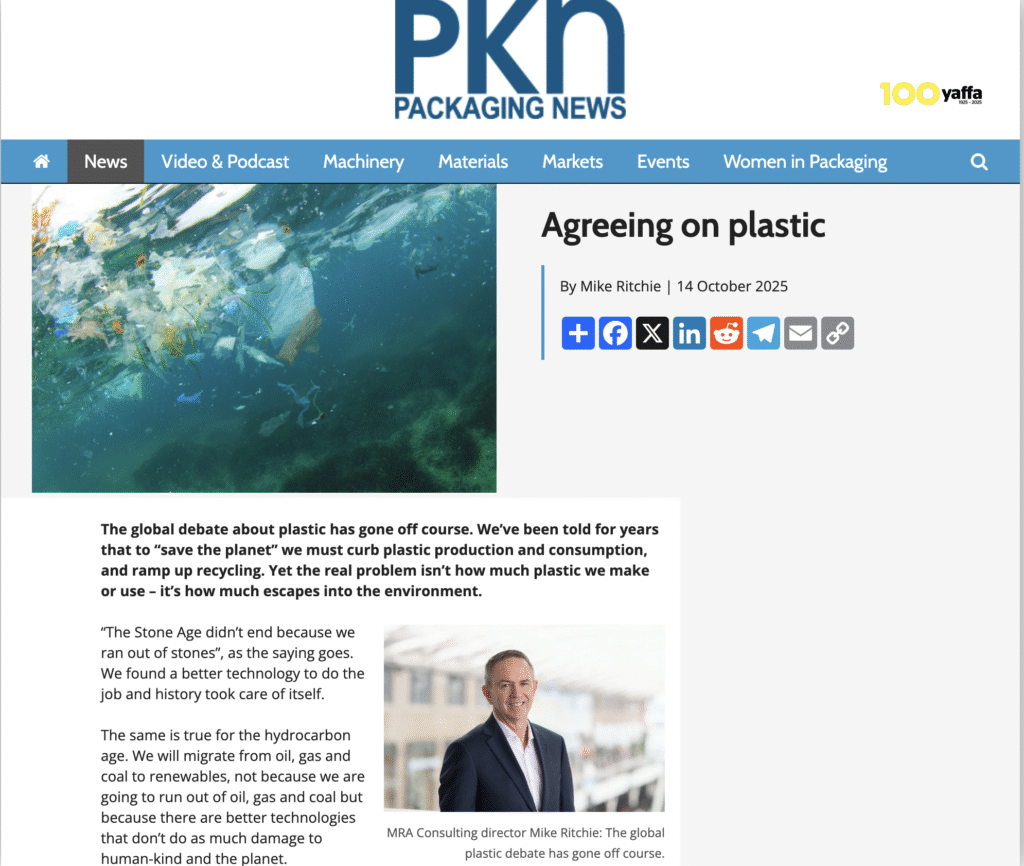
Whether it is sea birds with stomachs full of microplastics, turtles mistaking plastic bags for edible jelly fish, rivers full of plastic bottles or landfills overflowing with plastic and causing Pollution, it is the effect of plastic, not its Production or Consumption that is the main issue.
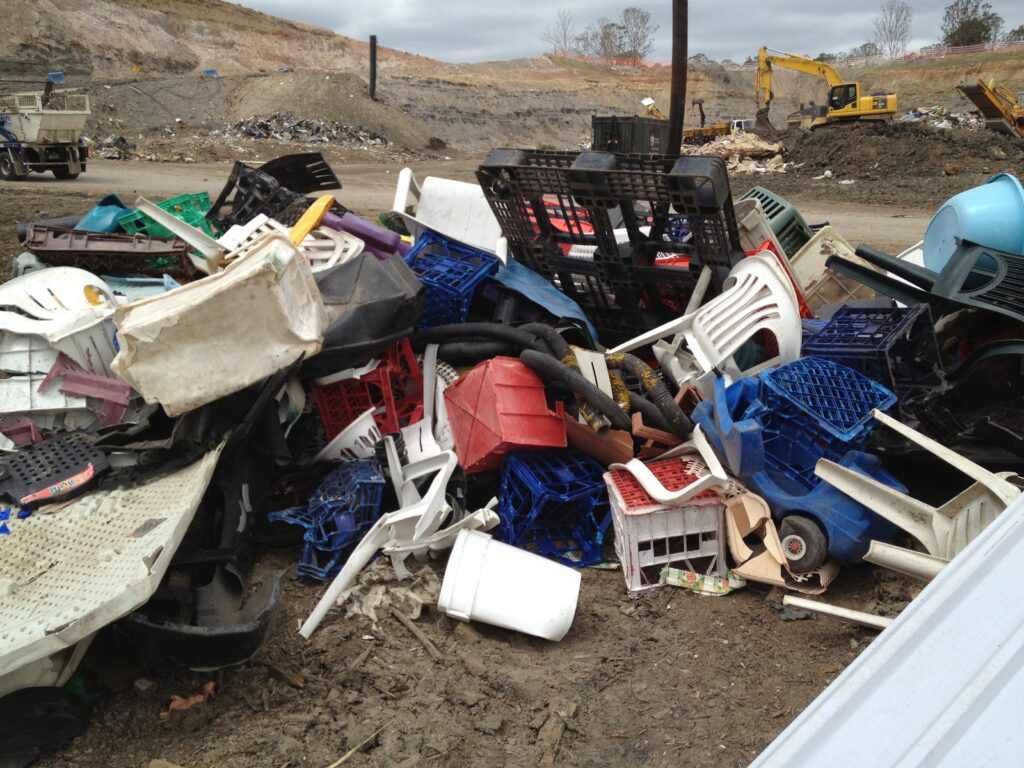
The point is, if we kept all plastic INSIDE the waste supply chain, then most of the problem is solved.
Let me put it this way: If Australia kept Producing and Consuming plastic but made sure it was recycled or sent to ‘Energy from Waste’ we would not have much of a plastic problem. Even if a lot went to landfill the biggest impact it would have is to fill up our scarce landfill resource too quickly.
“Hold on” I hear some of you saying. We have been told for years that we need to reduce plastic Production and Consumption and increase Recycling to “save the planet”. That is only partly true- and a worthy goal.
It is when plastic escapes the waste supply chain (which includes Recycling, Energy from Waste and Landfill) that we have a real problem.
Sure, we would fill up landfills more quickly than we otherwise would, and would need new landfills, but these are relatively minor problems compared to the globally significant pollution that plastic is causing.
The Global Plastics Treaty was commenced in 2022 at the UN Environment Assembly where 175 nations committed to developing a legally binding instrument to address plastic pollution, particularly in marine environments. Negotiations are slow, protracted and, since August, in a deadlock. Now its chair, Luis Vayas Valdivieso, is about to step down, following reports of behind the scene pressure by UNEP.
The problem with the Treaty lies in its scope. By trying to encompass the full lifecycle of plastics including design, production, consumption and disposal, the Treaty negotiations have been caught in a ridiculous debate about whether we should make plastic at all.
Of course, we should design plastics for recycling and reuse. Of course, we should substitute plastics for non-polluting alternatives where we can.
But focussing too much on Production and Consumption has caused the Treaty negotiators into intractable corners, stuck in opposing camps and missing the urgent point (which all sides agree upon – limiting Pollution).
What we should be focussing on is limiting plastic Pollution, now. The focus needs to be about keeping plastic INSIDE the waste supply chain. Not on how much we use or where we use it. Sure important, but right now, a second order priority.
Here is an example.
Australia consumes about 3.5 million tonnes of plastic per year.
That includes soft plastic around your potato chips (300kt/yr, or a massive 70 billion pieces of soft plastic/year), pallet wrap (150kt/yr), single use plastic containers for milk and soft drinks etc (approx. 1mt/yr), manufacturing such as car parts, medical equipment etc (about another 1.4mt/yr).
Almost all of that ends up in landfill. Only about 500,000t (14%) of plastic is recycled.
It would be great if it was all recycled, but it isn’t and it won’t be until landfill becomes much more expensive (or we subsidise recycling).
[On the positive side we are very good at recycling PET (soft drink) and HDPE (milk) bottles in Australia. If we “tethered” the caps to the bottles we would be best practice.]
So even with 86% going to landfill we live in a fairly pristine environment and do not suffer the plastic pollution problems experienced elsewhere in the world. Why?
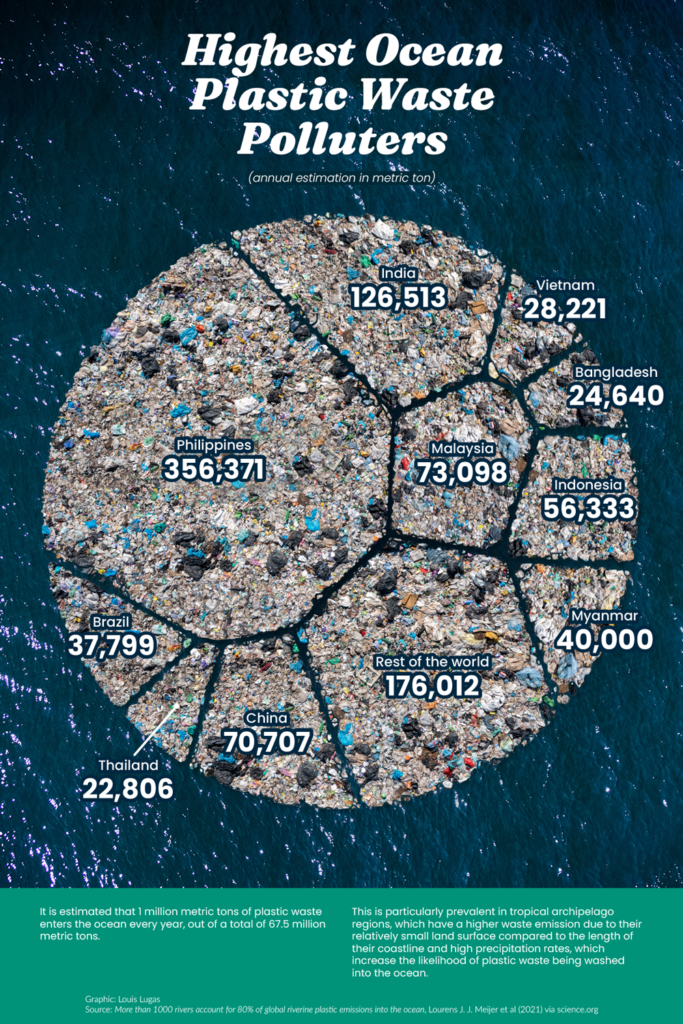
Source: More than 1000 rivers account for 80% of global riverine plastic emissions into the ocean, Lourens J. J. Meijer et al (2021) via science.org
Because we have a sophisticated waste supply chain that captures and keeps most plastic inside that supply chain. Yes, a lot goes to landfill but it doesn’t cause harm there. Plastic is inert in landfills and does not escape.
Much of the rest of the world is not so lucky.
Most of the developing world has little or no waste management system at all. That is why they suffer plastic pollution.
Our problem is that in the plastic debate we too quickly conflate the death of sea birds and turtles with plastic Production/Consumption or with Recycling/Landfilling. That is to mischaracterise the problem. Those four horsemen are relevant but only at the margins of our problem with plastic Pollution.
Let’s look at Production/Consumption first. Even if we dropped global plastic Production/Consumption by say 20% (a heroic assumption), the effect on plastic Pollution rates would at best be 20%.
It would reduce oil and gas consumption by a very small fraction (i.e. 1.4% = 20% of 7%) (which is not a bad thing) but it does not address Pollution other than at the margins.
Let’s look at Recycling/Landfilling. Neither recycling nor landfilling have any effect on escape to the environment. Recycling diverts from landfill and vice versa. They do nothing to stopping sea birds or humans, eating plastic. We don’t collect more plastic because we recycle it or landfill it. That has the argument the wrong way around.
It is a nonsense to say that if we increased recycling it would have any material effect on turtles mistaking plastic bags for jellyfish. Or that if we recycled more, that could prevent humans from consuming microplastics.
Recycling does not fund collection. There is not enough value in waste plastic to fund the costs of collecting it. That is a myth.
The only time that happens is when governments put a Container Deposit Value on a plastic container by law. Then the plastic bottle is worth the 10c rebate and people collect them. [That, dear reader, is one of the simplest solutions to a big swathe of plastic pollution.]
We need to focus on Pollution. That means focussing on Collection, Littering and Illegal Dumping. Escape. Escape from a sophisticated waste management system.
Which of course is the obvious main problem. Most of the rest of the world does not have the benefit of a sophisticated waste management system. They don’t have trucks and bins or Container Deposit schemes. Many don’t have functioning landfills or EfW facilities.
Surely a Global Plastics Treaty should start there. It is agreed by everyone. Let’s sign it and get on with it.
Focussing 100% of our effort there could deliver an easy 50-80% reduction in pollution.
A case in point. Australia has a sophisticated waste system. But the introduction of a 10c Container Deposit Value further reduced our plastic litter rates by 40%. What if we lifted the rebate to 20c. How easy is that!!
I just visited 20 Pacific Island nations. Only 3 had decent collection, or Container Deposits or Recycling/landfill/EfW systems. The other 17 suffered massive pollution problems. Most of, it plastic bottles which would be easily fixed with a CDS system (not a reduction in Consumption).
We know how to fix plastic pollution. Build a decent waste management system, provide financial incentives to use it and punish littering. Simple.
In Australia, we have a sophisticated collection system and once plastic enters it, there is very little escape (contrary to popular opinion). Landfills do not “leach” plastic. They do not leach microplastic. Recyclers recycle 99% of the plastic they receive (again contrary to popular tropes and Scott Morrison misquoting the statistics).
The small amount of pollution we see in Australia is from plastic NOT ENTERING the system. That is what needs to be fixed.
It is too easy to litter or dump plastic without penalty. It is too easy to pollute without consequence.
And of course, it’s too easy to introduce plastic into the economy, without caring for its fate.
For example:
- Why are fruit stickers not compostable?
- Why are bait bags not biodegradable by law?
- Why are photo-degradable plastic bags (that cause microplastic) allowed in our economy?
- Why are helium balloons still allowed to be released to the environment?
- Why are wet wipes allowed to be put into sewerage when they are plastic based?
- Why are plastic beads (microplastics) still permitted in exfoliating products, soaps and cosmetics?
- Why are some producers able to mislead consumers about product “biodegradability” when they cause microplastic pollution?
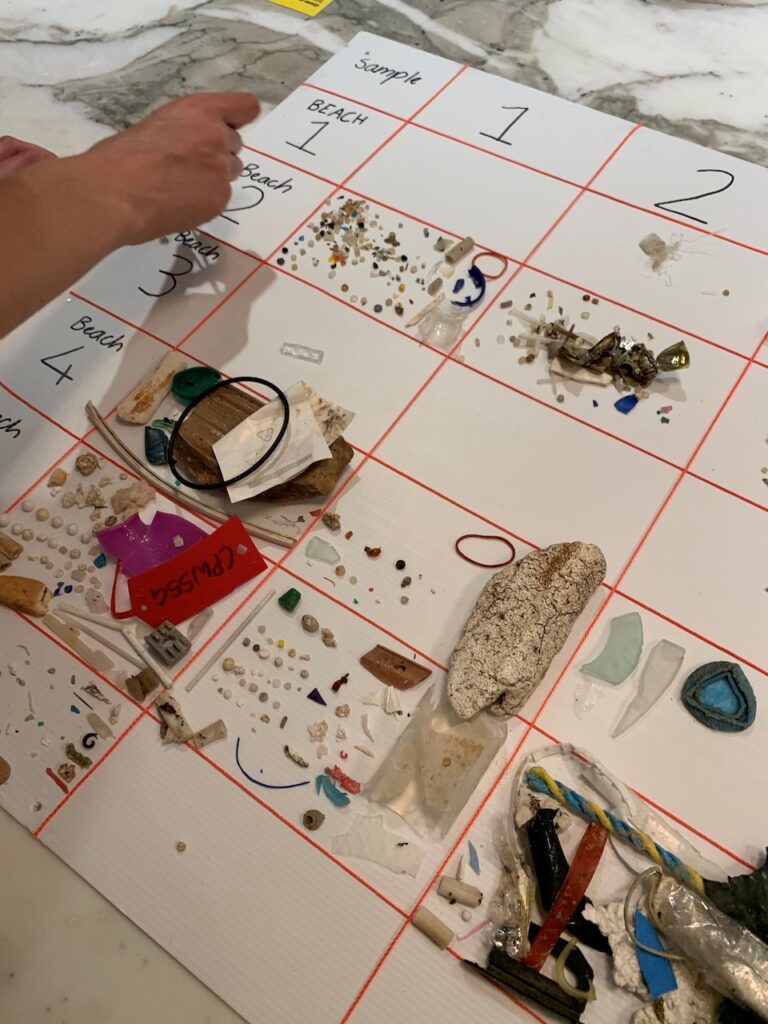
- Why are our beaches covered in littered plastic and nurdles?
- Why does plastic still plague the roadside and verges?
More urgently, why isn’t Australian and international aid directed to establishing even rudimentary collection and landfilling systems in developing countries. It is not that hard.
The answer – because we don’t focus on the core problem. We get sidetracked. Pareto rule – get 80% of the gain by doing the easy 20%. There are two key priorities:
- In developing countries by building proper collection and recycling/disposal waste supply chains; and
- in Australia, by developing proper policies to limit the escape of plastic from our (existing) waste supply chain.
If we put as much effort into these, as we do into trying to kerb plastic Production and Consumption, we would be a lot closer to solving the actual plastic pollution problem and agreeing a workable Plastics Treaty.
Please let your State and Federal Environment Ministers know.
Mike Ritchie is the Managing Director at MRA Consulting Group.
This article has been published by the following media outlets: