National Recycling Week 2026: We’ll do our bit this National Recycling Week. Canberra needs to do its bit too.
By Dimitris Dimoliatis, MRA Consulting Group
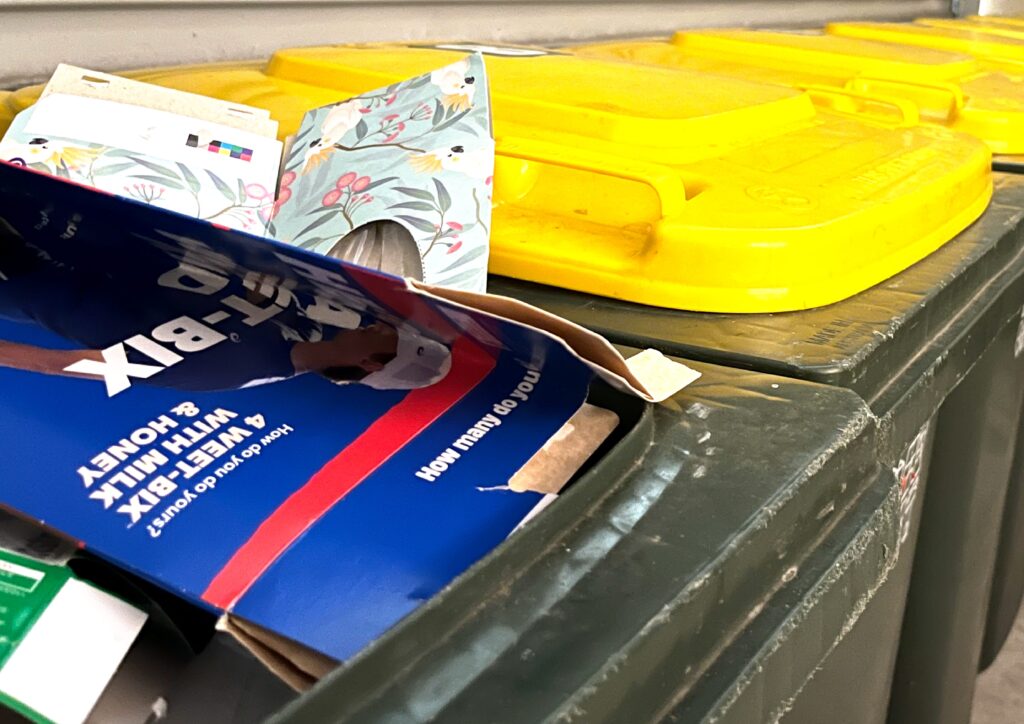
This National Recycling Week (9–15 November), Australians are being encouraged to recycle more and recycle better. Planet Ark’s theme, “Join the Cycle”, marks 30 years of the campaign. Meanwhile, the Australian Packaging Covenant Organisation (APCO) has launched a national advertising campaign to turn recycling awareness into action.
The message is simple: check the Australasian Recycling Label, use the right bin, return eligible containers and take soft plastics to designated drop-off points.
But there is a bigger question: what happens when Australians do everything right, but the system fails them?
Households can only recycle what the infrastructure allows. That infrastructure depends on government policy: packaging designed for recovery, investment in recycling facilities and reliable markets for recycled materials.
And that is where Australia is falling short.
A promise made, then postponed
In 2023, then environment minister Tanya Plibersek promised mandatory national packaging rules, backed by environment ministers across the country.
Three years later, they are still missing.
In September, we were told by Environment Minister Murray Watt that the promised Commonwealth scheme for packaging would not be introduced during this term of government. Reform has been pushed out to 2028 at the earliest, with “cost of living” pressures cited as the reason.
Unfortunately, the current voluntary approach has already had its chance, and the results speak for themselves (all data from APCO):
- Plastic packaging: Only 20% recycled or composted, against a 70% target.
- Soft plastics: Just 9% recovered, with only 1% recycled content in new flexible packaging.
- Paper and cardboard: 66% recovered, still below the 70% target.
- All packaging: 59% recovered.
The conclusion? Voluntary action alone is not delivering.
The cost of getting it right
What would a mandatory national system cost?
Modelling by APCO and MRA Consulting Group estimates that raising packaging recovery to 70% would cost around 0.3 cents per packaged item. Across a typical weekly shop of 60 items, that is about 20 cents.
Against that modest cost are substantial potential savings including less landfill, lower council waste-management costs, reduced litter, cleaner materials for recyclers and greater certainty for businesses investing in recycling infrastructure.
Hence, MRA’s Mike Ritchie argues that the net economic cost would be close to zero. Yet the government has not provided a Regulatory Impact Statement to properly document the costs and benefits.
If cost is the concern, Australians deserve to see the evidence.
Without rules, investment is at risk
Soft plastics illustrate the consequences of policy uncertainty.
Why would businesses redesign packaging, retailers invest in collection schemes or recyclers build processing plants when the regulatory framework underpinning those investments remains uncertain?
The consequences are already visible. Recycling Plastics Australia, a soft plastics recycler that received $20 million in federal grant funding, went into administration in September, costing around 60 jobs.
Other recyclers are reportedly importing soft plastics from New Zealand because they cannot secure enough material locally. Meanwhile, the national rollout of soft plastic collection has stalled.
This is what happens when businesses invest in a system without the rules needed to make it viable. Those who committed early are left carrying the risk, while free riders face few consequences.
States are stepping up. Canberra must follow.
With national reform stalled, states are taking action.
In October, NSW passed its Plastics Plan 2.0, introducing further restrictions on items such as plastic bread tags, balloon sticks and microbeads. From 2028, single-use takeaway coffee cups will need to be recyclable, and cafes will have to accept clean reusable cups.
Industry is also doing its part. More than 500,000 products now carry the Australasian Recycling Label, and APCO is investing in advertising to encourage Australians to use it.
The Commonwealth says packaging reform remains a national priority, with a revised approach involving industry through National Competition Policy.
But state action is no substitute for a consistent national system. Different sets of packaging and labelling rules would create unnecessary costs and complexity for businesses, consumers and recyclers. The same way the non-standardised kerbside collection systems across Australia cause confusion.
Packaging waste does not stop at state borders. Neither should the rules governing it.
What needs to happen now
We are calling on the Commonwealth to deliver the reforms it promised:
- Mandatory packaging standards that require products to be designed for recovery.
- Recycled-content requirements to create reliable demand for recovered materials.
- Producer responsibility, ensuring businesses contribute to the cost of managing the packaging they put on the market.
- A published Regulatory Impact Statement so the public can assess the costs and benefits.
Australia also needs consistent national recycling rules: the same labels, bin colours and accepted materials, whether you live in Sydney, Darwin, Dubbo or Devonport.
Don’t wait for Canberra
Government delays are no excuse to stop recycling. Every household can still make a difference and MRA’s guide to recycling can help. Some key actions include:
- Check the recycling label before disposing of packaging.
- Keep recyclables loose, not bagged.
- Keep soft plastics out of the yellow bin and use designated drop-off points.
- Never put batteries in kerbside bins.
- Return eligible drink containers for a refund.
There are reasons to be optimistic. Polling commissioned by the Boomerang Alliance found that 87% of voters believe the federal government has a responsibility to introduce binding rules for plastic packaging.
Container deposit schemes now operate in every Australian state, demonstrating that well-designed, mandatory systems can work. NSW’s Return and Earn, for example, has recovered billions of containers since 2017.
Australians are willing to do their part. They recognise the recycling label, use container refund schemes and want to make better choices.
But individual effort cannot compensate for a system that lacks the infrastructure, investment and regulation to succeed.
We are doing our bit. The question is: when will Canberra do its own?
As always, I welcome your feedback on this, or any other topic on ‘The Tipping Point’.