Landfill
22 November 2019
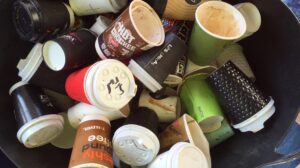
Let’s fix coffee cups so we can start to focus on food waste
One billion single use coffee cups are sent to landfill every year. Sounds like a lot but this represents less than 0.0004% of the waste generated in Australia per year.
So, what can we do to deal with coffee cups so that we can focus on significant streams like organics (particularly food), which represent around 50% of all waste to landfill in Australia?
Policy
20 September 2019
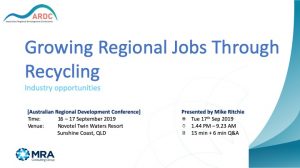
Growing regional jobs through recycling
For every job in landfill we create 3 jobs in recycling. For every 10,000t of waste we landfill we generate 3 landfill jobs vs 9.2 recycling jobs. Mike Ritchie explains how recycling can help grow regional jobs.

Policy
16 August 2019
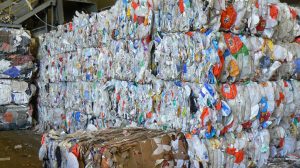
The waste and recycling industry welcomes COAG intervention in waste issues
MRA welcomes the involvement of the Prime Minister and Premiers at the 9 August 2019 COAG to resolve the many difficulties facing the recycling and waste management sector.
In the Media
15 May 2019
Mike Ritchie speaks to Footprint News on ‘chain of responsibility’ provisions in Council recycling tenders
MRA’s Mike Ritchie was interviewed by Footprint news on the "chain of responsibility" clauses that Australian councils have started adding to their tender documents for recycling services.
Grants
29 March 2019
Sustainability Victoria Resource Recovery Infrastructure Fund grants: round 4 now open
Sustainability Victoria is providing a $4 million funding boost for major recycling projects that aim to increase resource recovery. These fourth round grants of between $40,000 and $500,000 are aimed at business and local governments that aim to increase sorting and reprocess priority materials.
Infrastructure
22 February 2019
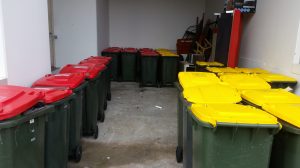
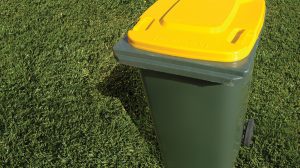
The urgency of saving kerbside recycling is being felt in Melbourne
Since Mike's article on Saving Kerbside Recycling was written, the Victorian EPA has temporarily closed down the three SKM MRFs in Melbourne, due to fire risk associated with stockpiles.
Over 20 Councils have either suspended their kerbside recycling services or they are sending their recyclables to landfill.
Recycling
6 February 2019
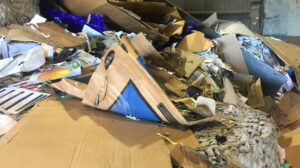
Saving kerbside recycling
It has now been over a year since China introduced its National Sword policy to restrict the importation of kerbside recyclable materials from the rest of the world. The purpose of the policy was to increase the recovery of domestically generated recyclables within China and further boost its own manufacturing. The new rule is a 0.5% contamination rate in Australian exported material. Few Australian Materials Recovery Facilities (MRF) were built for that level of purity.
Recycling
10 December 2018
The status of C&I sorting in Australia
With landfill levies in NSW at $140.20/t you would think that sorting of commercial waste would be more common than it is. Less than 5% of the Commercial and Industrial (C&I) waste in NSW is put through a processing plant to recover the valuable materials. In other words, less than 120,000t of the 5.5 MT that is generated is put through a processing plant. There are no dedicated C&I sorting facilities in other States (and landfill levies are lower).
MRA News
8 November 2018
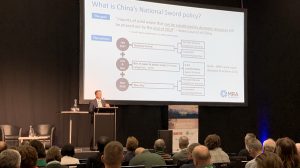
MRA presents at WasteMINZ 2018 Conference
The annual WasteMINZ Conference (5-8 November 2018) is wrapping up in Christchurch at the Air Force Museum of New Zealand and Mike was amongst the first to present on its second day. Mike outlined the challenges and impacts of China's National Sword policy on local recycling markets and described the industry's current and potential responses.

MRA News
24 October 2018
Mike Ritchie presents at ISWA’s 2018 World Congress
MRA's Mike Ritchie presented yesterday at the International Solid Waste Association 2018 World Congress held at Kuala Lumpur. Mike's presentation focused on China's National Sword and its impact on Australia's recycling.

MRA News
11 October 2018
MRA in the news
MRA is actively engaging in the waste management debate and this week has seen two of our own being extensively quoted on national newspapers. The Financial Review has reported on MRA's submission to the ACCC on the proposed merging of Bingo and DADI, quoting Mike Ritchie on the expected positive outcomes of the merger in terms of improved recovery rates for C&I waste in Sydney.
Recycling
26 September 2018
Bingo acquisition of DADI may open up C&I sorting capacity in Australia
According to the 2016 National Waste Report, Commercial and Industrial waste (C&I) represents 20 MT of the 53 MT of waste generated in Australia (or 40% of generation). It also represents 34% of all waste sent to landfill (or 7.2MT out of 21MT) and achieves a 64% recovery rate compared to C&D (64%) and MSW (51%).
Not bad in the scheme of things.